The Difference A Good Scanner Makes

So, long story short, I’ve been scanning. A lot. Mostly stuff shot by my Dad and my Grandparents over the decades. All of them have been on slide transparencies.

For the longest time, I was using a Minolta Dual Scan II to scan the slides, as it was the best I had, and the best I could afford.

Fast foward to December of last year. I finally got a new scanner. One that was made in the last two years too! (The Minolta, in contrast, was over 10 or so years old.)

Being the annoying perfectionist I am, I decided to redo every single slide all over again, at higher resolutions, and with multi-exposure and ICE.

And boy, am I glad I did! Below is the same slide, taken in Alberta circa 1976 by my Dad.

The top is scanned on my old Minolta, the bottom on my new Plustek Opticfilm 8200i.

(Click to make bigger)

Minolta Dual Scan II
Minolta Dual Scan II (1999) — No Multi-exposure
Plustek Opticfilm 8200i
Plustek Opticfilm 8200i (2012)– Multi-exposure

A major, major upgrade in every possible sense. Better colour representation, better dynamic range, better resolution, everything.

I tried to replicate the scans as best I could so that they matched eachother, but it’s tricky to do so in Lightroom.

This is mainly just to show how much a difference a good scanner makes (especially one with multi-exposure.)

Matt

Film Restoration

Screengrab from Blu-Ray restoration of "How The West Was Won" (smilebox version)
Screengrab from Blu-Ray restoration of “How The West Was Won” (smilebox version)

Ah restorations and remasters. I love ’em! (As evidenced by my continual project of digitizing and retouching my Dad’s photographic collection.)

Film remasters, audio remasters, photographic restorations, everything. It’s breathing new life into something old and making it look and sound the best it can, either by taking the original film stock, audio tape, or photograph, and giving it a high-resolution digital transfer that captures every detail.

(When it comes to film, the ironic thing is that once they’ve finished the digital restoration, a copy of that restoration goes right back onto new fine-grain film stock, and a digital copy goes into a server storage farm. This is due to the fact that long-term digital storage is shaky and formats change frequently.)

I’ve always wanted to get into the field, but there’s a lot to learn. A lot of time and work goes into restorations and remasters (film in particular).

To show just what goes into film restoring, I wandered around YouTube and found some videos that I believe detail the process fairly well.

(There are a number of them!) [Warning: Flash player ahead!]

Continue reading

GTAography

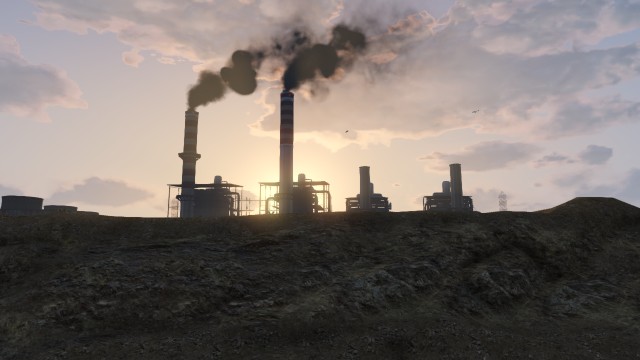
Thanks to the multi-week holiday break we get from our program, I’ve been able to play a bit more Grand Theft Auto V.

I got it back in September when it came out, and 4 months later, I still think it looks damn good.

I’m continually impressed by the visuals in this game, in particular the atmosphere. It’s one of the best looking games I’ve seen in a while, and the folks at Rockstar really outdid themselves.

Luckily, they give players a cameraphone so you can go around snapping photos of things you come across.

Below are some that I’ve taken over the course of my playing. They tend to be mainly landscape-type photography taken in the desert and wilderness areas. (Also power lines seem to make frequent appearances.)

gta-018 gta-017 gta-016 gta-015 gta-014 gta-013 gta-012 gta-011 gta-010 gta-09 gta-08 gta-07 gta-06 gta-05 gta-04 gta-03 gta-02 gta-01

LIFE Photojournalist Bill Eppridge, Dead at 71

1277961_10200278062868076_1909952087_o[1]
Robert Kennedy assassination, June 6,1968 — Bill Eppridge/Time & Life Pictures/Getty
The LIFE photographer who shot these infamous photographs on the night of Robert Kennedy’s assassination, Bill Eppridge, died yesterday.

Talking about that night he said “I know it was the right thing to do [..] I think that that kind of a situation has got to be documented, it has to be told, and it has to be told to people who do not understand the horrors that we can face.”

He was 75.

TIME
http://lightbox.time.com/2013/10/03/in-memoriam-iconic-life-photographer-bill-eppridge-1938-2013

The NYT Lens Blog has a good post about him here
http://lens.blogs.nytimes.com/2013/10/03/the-moment-a-photographer-became-a-historian/

Posts navigation

1 2 3 4
Scroll to top